Useful information (demo content — to be replaced)
Important: Demo content: please read
This page is placeholder content, written by Longbow to show how a care guide could look on this website. It is not Keki’s own advice.
Before the site goes live, the rescue needs to read every answer below, correct what is wrong and replace it with its own words.
Looking after your small animals
Guinea pigs and rabbits are a big commitment, and we would much rather you have all the facts before you fall in love. Here is what we would like every adopter to know, with the questions we are asked most often under each part. Tap a question to open it.
Before you adopt
Time, money and where they will live.
How much time will my pets need each day?
Plan on at least an hour a day, spread through the morning and evening: fresh hay and water, a vegetable feed, spot-cleaning and some gentle company. A full clean-out is needed every week or so.
What will they cost?
The set-up (housing, run, bowls, bedding) is the biggest bill, and after that there is food, bedding, vaccinations for rabbits and the occasional vet visit. A small animal can live for five to ten years, so please think about the whole lifetime, not just the first month.
Do I need permission from my landlord?
If you rent, please check your tenancy agreement and get your landlord’s agreement in writing before you apply. We may ask to see it.
Can my pets live indoors or do they need to be outside?
Either can work, as long as they have room, fresh air, daylight and protection from extremes of temperature. Indoor pets still need a safe space to exercise every day, and outdoor pets need a secure, weatherproof home with a sheltered run.
Housing and equipment
Your pets will spend nearly all of their lives in the home you give them, so it is worth getting right. Give them space to run, somewhere to hide and a roof over their heads, whatever the weather.
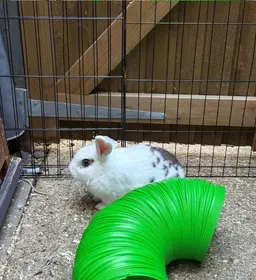
Always keep a safe, secure run for daytime and a snug, weatherproof place for the night.
Tip: One hidey house each
Give every animal its own hiding place, plus one spare. It stops arguments before they start.
Questions about housing
Hutches, runs and what goes inside.
How much space do they need?
As much as you can give them. As a guide, a pair of rabbits should have a hutch or shed of at least 6ft by 2ft with a permanently attached run, and a pair of guinea pigs should have a hutch or cage of at least 120cm by 60cm. Bigger is always better.
How do I keep them safe and comfortable outside?
Choose a solid, weatherproof home raised off the ground, with a lockable door to keep out foxes and cats. In summer provide shade and plenty of water; in winter add extra bedding and shelter from wind, rain and frost.
What should go inside the hutch?
A deep layer of bedding with hay on top, a heavy bowl and a water bottle or bowl, and at least one hidey house per animal so nobody has to argue over a hiding place. Tunnels and cardboard boxes make good, cheap extras.
Which bedding is best?
Paper-based or wood-shaving bedding is fine for most small animals, with plenty of hay. Avoid dusty bedding and cedar or pine shavings, which can upset their breathing.
Feeding
Good food is simple: lots of hay, a little of everything else. A well-fed guinea pig or rabbit has bright eyes, a shiny coat and a very loud appetite.
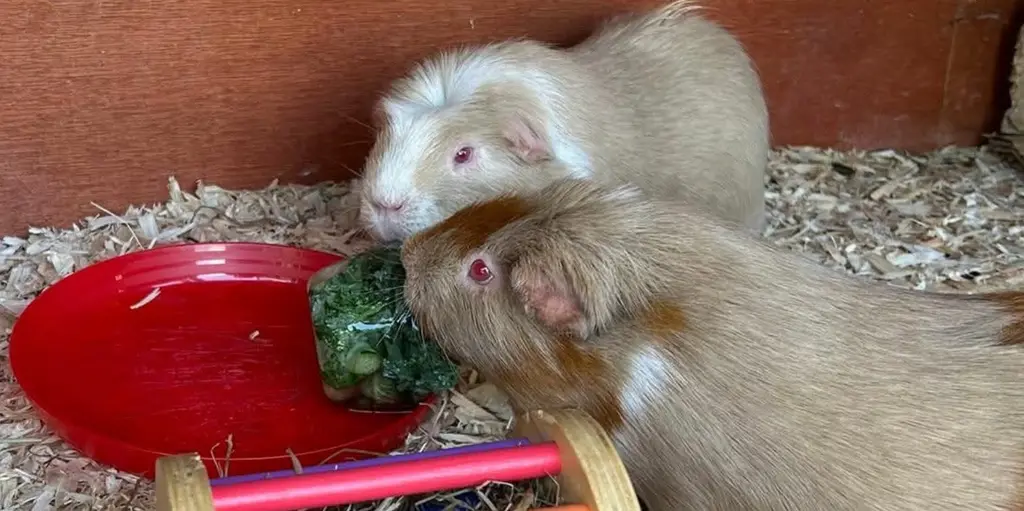
Important: Hay, every day
Fresh hay or grass should always be available, and fresh water changed daily.
Questions about feeding
What to give them, and what to keep away.
What should they eat every day?
Hay, hay and more hay. Unlimited fresh hay or grass should make up most of what they eat, with a small portion of good-quality nuggets and a handful of fresh vegetables. Fresh water must always be available.
Which vegetables are safe?
Most leafy greens, peppers (guinea pigs love them for the vitamin C), cucumber and herbs such as parsley and coriander are good choices. Introduce anything new slowly and in small amounts.
What should I never feed them?
Never feed chocolate, onions, potatoes, avocado, rhubarb, iceberg lettuce, muesli-style mixes or any human snack food. If you are not sure about something, please ask us or your vet first.
Friends for life
Guinea pigs and rabbits are happiest with a friend of their own kind. A bonded pair keeps each other warm, safe and entertained, and we would love to help you find the right match.
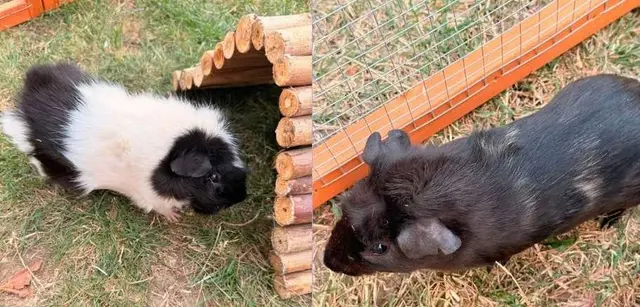
Bruno and Bear, best of friends. 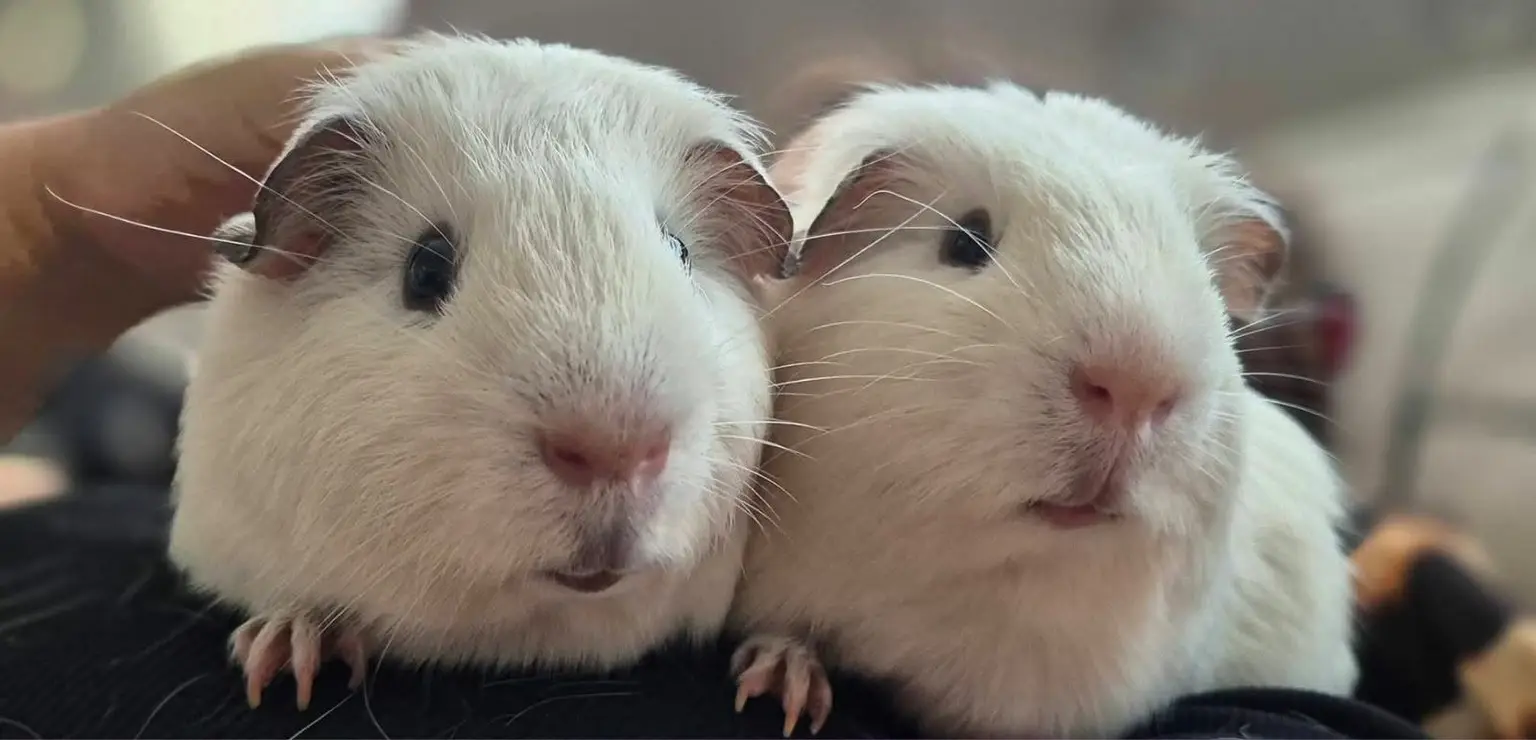
Casper and Milo, side by side.
Note: Not guinea pigs with rabbits
They speak different languages, so each kind needs its own companion.
Questions about companions, other pets and children
Friends, family and the rest of the household.
Companions and bonding
Can I keep just one guinea pig or rabbit?
Please don’t. Both are sociable animals and are happiest with their own kind. Guinea pigs must not live alone, and a lone rabbit will need an awful lot of your time.
Can guinea pigs and rabbits live together?
No. They speak different languages, and a rabbit can injure a guinea pig by accident or on purpose. They also have different diets. Each species needs its own companion of the same kind.
Which pairings work best?
A neutered male and a female is the classic rabbit pairing, and sows (females) or neutered boars usually get along well. We are happy to talk through the options and match you with a friend for your pet.
Do you help with bonding?
Yes. Our bonding service gives animals a calm, neutral space and experienced handlers to give a new friendship the best chance. You can find out more on our bonding page.
Other pets and children in the home
Can I keep them with my cat or dog?
Cats and dogs are predators and many will chase or frighten rabbits and guinea pigs, even if they are gentle. We ask that small animals are kept in a room or enclosure the other pet cannot get into, and that they are never left together unsupervised.
What introductions do you expect?
Take things slowly. Let the animals meet through a barrier first, keep the first meetings short, and always stay in the room. We may ask you how this went when we check in after adoption.
Are rabbits and guinea pigs good pets for children?
They can be wonderful, but they are fragile and are often easily frightened. Children should always be supervised, taught to handle them gently, and an adult should always be responsible for their care.
Health, holidays and the first week
Vets, holidays and settling in.
Health and vet care
Do I need to register with a vet?
Yes, please. Find a vet who treats rabbits and small animals (not every practice does) and register before you bring your pets home, so you are not hunting for one in an emergency.
How can I tell if they are poorly?
Watch for not eating or drinking, small or no droppings, a hunched posture, runny eyes or nose, wheezing, or teeth that look too long. Small animals hide illness, so if something seems off, call your vet the same day.
Should my pets be neutered?
We neuter rabbits before rehoming and recommend it, because it prevents unwanted babies and helps with bonding and behaviour. Your vet can advise on guinea pigs.
Holidays and boarding
Who looks after my pets when I go away?
We offer boarding for guinea pigs and rabbits, with daily care and plenty of exercise. Spaces fill up quickly in the school holidays, so please book as early as you can through our boarding page.
Bringing them home
What should I expect in the first week?
Keep things quiet and calm. Give them a few days to settle into their new home before handling for long, offer lots of hay and their usual food, and let them come to you. A little patience now makes friends for life.
What if I need help after I get home?
Please get in touch. We would much rather hear from you with a small worry than a big problem later, and we are happy to talk anything through.